
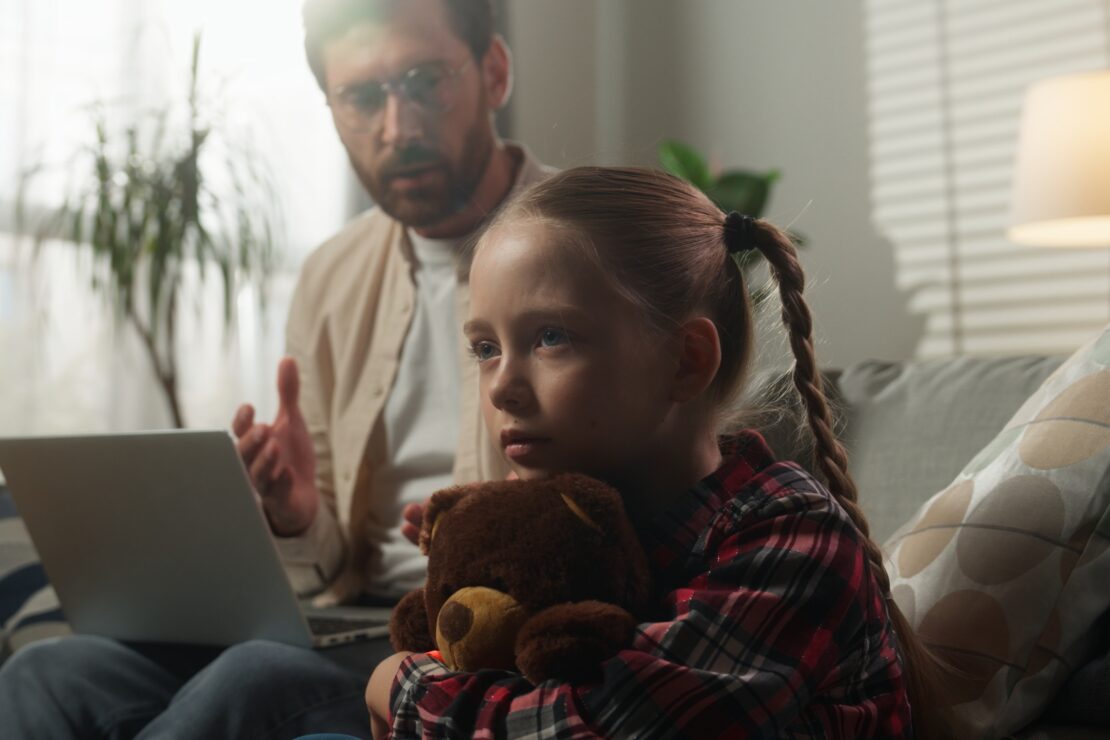
Speaking out about traumatic experiences is an uncomfortable and often emotionally painful experience. Children experience these same feelings, leading to sexual abuse commonly being kept secret. In the cases that children do disclose, it is often long after the abuse has started. Sometimes silence is the most telling sign that something is not right. This silence is frequently labeled as a sign of lying, but learning about the dynamics of disclosure is an essential step in supporting children. Society has a habit of labeling children as liars, but the truth is the vast majority of children don’t make up abuse. In fact, it is more common to lie about abuse not occurring than to lie that abuse did occur (Summit, 1983). To understand how children disclose, we can look at R.C. Summit’s Child Sexual Abuse Accommodation Syndrome (CSAAS).
Although not an actual syndrome, CSAAS is a theoretical model to help better understand how children view their sexual abuse. Summit has stated that he regrets not having named this model differently, as the term “syndrome” can be confusing, as that term alludes to a medical or psychological diagnosis (Summit, 1993). Summit stated, “Had I known the legal consequences of the word at the time, I might better have chosen a name like the Child Sexual Abuse Accommodation Pattern to avoid any pathological or diagnostic implications” (Summit, 1993, p.157).
CSAAS identifies five categories that explain how children respond to and view their experiences of sexual abuse. These categories are secrecy, helplessness, entrapment, and accommodation, delayed disclosure, and recantation (Summit, 1983). If we better understand these categories and how they present, we can start giving children the attention and support they need.
Secrecy
Children don’t prepare for the possibility of sexual assault, and caregivers often focus on teaching their kids about “stranger danger”, but the truth is that 90% of alleged offenders are someone the child knows, loves, and trusts (San Diego District Attorney’s Office, 2010). Offenders frequently use secrecy to prevent the child from telling, often urging them to keep it a secret (Summit, 1983). Some examples Summit gives that an offender may use to create secrecy are that if the child tells, “I won’t love you anymore”, “I will hurt your pets”, and “your mom will kill me”. These are just a few of the many examples of the ways an offender may use threats, lies or fear to cause the child to keep the abuse a secret. According to Summit, this can create confusion for children and cause fear or shame that may lead to delayed disclosure. The child may be told that speaking up will get them in trouble, that they won’t be believed, or that it will break up the family. When adults respond to delayed disclosure by asking why they didn’t speak sooner, it reinforces the child’s fear of being punished, blamed, or ignored (Summit, 1983).
Helplessness
A common misconception is that a child being abused will speak up to protect themselves. In reality, children are typically taught to obey and trust the adults in their lives. When these trusted authority figures take advantage of this relationship, it can make the child feel helpless (Summit, 1983). Offenders use manipulation tactics such as filling the unmet needs of a child to strengthen their control, as well as further isolate them from their support systems. Some examples of unmet needs for a child may be food insecurity, a lack of affection, and emotional invalidation. The offender may even threaten the child, increasing the feeling of helplessness in the victim (National Office for Child Safety, n.d.).
Entrapment and Accommodation
This secrecy and helplessness lead the child into entrapment. In the case of victim manipulation, children are likely to experience continued abuse. Continued abuse becomes the child’s reality, forcing them to develop coping mechanisms and adapt (Summit, 1983). It is not uncommon for a victim to still love and care about their abuser, primarily when victim manipulation tactics are used. An offender may first gain the child’s trust and create the illusion of an emotional bond, leading the child into believing they are in a loving relationship (Barnardo’s, 2019). In this case, the child may feel stuck between stopping the abuse and getting their abuser in trouble. To adapt, a child might mentally accommodate their feelings to minimize internal conflict about the experience (O’Donohue & Fanetti, 2016)
Delayed and Unconvincing Disclosure
A lot of cases of sexual assault never get disclosed, so when they do, it should always be taken seriously (Summit, 1983). When a child decides to disclose, it may not look how we expect. It can take years for some children to speak out about their abuse, and when they do, it often is not a straightforward statement. For example, a child may say or exhibit behaviors that they believe are a disclosure, even if they do not explicitly state it, which can make the child feel unheard (O’Donohue & Fanetti, 2016). Kids are likely to disclose in an unconvincing way, which is often mistaken for lying, either to get out of trouble or to get back at someone they dislike. In cases of ongoing abuse and family conflict, the collapse of a child’s ability to accommodate may prompt the disclosure. In these cases, children may disclose in an outburst, angrily, or after a streak of rebellious behaviors. Children may also be vague in the details of their abuse and add more as time goes on. Victims may also wait until adolescence or adulthood when they have gained enough autonomy to make a disclosure (Summit, 1983).
Recantation
Recantation is when a victim takes back their disclosure or says they lied about the abuse occurring. This might be because life for the child after disclosure seems worse, or they believe that returning to how things were would be easier (O’Donohue & Fanetti, 2016). Children with unsupportive caregivers are also more likely to recant. When the child feels their caregiver does not believe them, blames them for the abuse, or pressures them to retract their statement, they may do so. Even with the most explicit claims of abuse, recantation affirms adults’ belief that children lie, strengthening society’s inaccurate assumptions (Summit, 1983). Research has also found no evidence to support claims that recantation indicates the child’s original allegations are false (USC Gould School of Law, 2007).
How to Support Children When They Disclose
The coping mechanisms children adopt should not be overlooked or seen as fabrication but recognized as signs of abuse. Believing children when they disclose abuse and supporting them can lead to healing rather than further traumatization. One way to protect children is to give them a safe place to talk about it when they are ready. Research shows that disclosure is often not initiated by the child, and when asked why they didn’t disclose, many children said it was because no one asked (McElvaney, 2015). In a study conducted by Priebe and Svedin, it was found that children were most likely to disclose when they had a supportive and trusting relationship with their caregiver, who provided support without being overprotective (McElvaney & McGill, 2022). It can be hard to imagine children staying silent about abuse, or that our trusted friends and family could be abusers, but the effects of not believing children who report abuse can cause further trauma and long-term psychological harm. Secondary trauma from telling and reliving their abuse can be intensified when their own fears of blame and disbelief are reinforced by the people they view as safe adults (Summit, 1993).
Children need more than validation to heal from abuse. According to the Mayo Clinic, following a disclosure, a physical exam may be essential for identifying any injuries or indicators of abuse. Once the safety of the child has been ensured, ongoing treatment can reduce the long-term psychological effects of trauma, as well as prevent future abuse from occurring. Therapy for a child with trauma can be valuable in the healing journey. Trauma-focused cognitive behavioral therapy is a highly effective method in giving children the tools to cope and ultimately overcome distressing thoughts, feelings, and memories from abuse (Mayo Clinic Staff, 2022). Other options for trauma-informed treatment are eye movement desensitization and reprocessing, also known as EMDR, to target specific troubling memories, and somatic therapy to release trauma stored in the body (RAINN, 2025).
Conclusion
Keeping children safe starts with understanding that they do not disclose in linear, neat ways. Summit’s CSAAS framework helps us understand that secrecy, delayed disclosure, and even recantation is not evidence of lying, but are normal responses to victim manipulation, fear, and confusion. As a caregiver, the first step to supporting children is to believe them. Responses should be guided by the child’s feelings, not adult assumptions, and questions from the child should be met with calm, caring responses. Adults have the ability to turn doubt into validation and isolation into safety when they understand how disclosure really looks.
References
Barnardos. (2019, April 8). Why grooming victims think they love their abuser. https://www.barnardos.org.uk/blog/why-grooming-victims-think-they-love-abuser
Mayo Clinic Staff. (2022, May 19). Child abuse — Diagnosis & treatment. Mayo Clinic. https://www.mayoclinic.org/diseases-conditions/child-abuse/diagnosis-treatment/drc-20370867
McElvaney, R. (2015). Disclosure of child sexual abuse: Delays, non-disclosure and partial disclosure — What the research tells us and implications for practice. https://doi.org/10.1002/car.2280
McGill, L., & McElvaney, R. (2022). Adult and adolescent disclosures of child sexual abuse: A comparative analysis. https://doi.org/10.1177/08862605221088278
National Office for Child Safety. (n.d.). Grooming. ChildSafety.gov.au. https://www.childsafety.gov.au/about-child-sexual-abuse/grooming
O’Donohue, W. T., & Fanetti, M. (Eds.). (2016). Forensic interviews regarding child sexual abuse: A guide to evidence-based practice. Springer Cham. https://doi.org/10.1007/978-3-319-21097-1
RAINN. (2025, August 28). Fight, flight, freeze, & fawn: Understanding survival responses. RAINN. https://rainn.org/mental-health-therapy-support-after-sexual-violence/fight-flight-freeze-and-fawn-understanding-survival-responses/
San Diego County District Attorney’s Office. (2010, March). Facts about sex offenders. https://www.sdcda.org/content/preventing/sex-offenders/facts-about-sex-offenders.pdf
Summit, R.C. (1993) Abuse of the Child Sexual Abuse Accommodation Syndrome, Journal of Child Sexual Abuse. https://doi.org/10.1300/J070v01n04_13
Summit, R. C. (1983). The child sexual abuse accommodation syndrome. Child Abuse & Neglect, 177–193. https://doi.org/10.1016/0145-2134(83)90070-4